
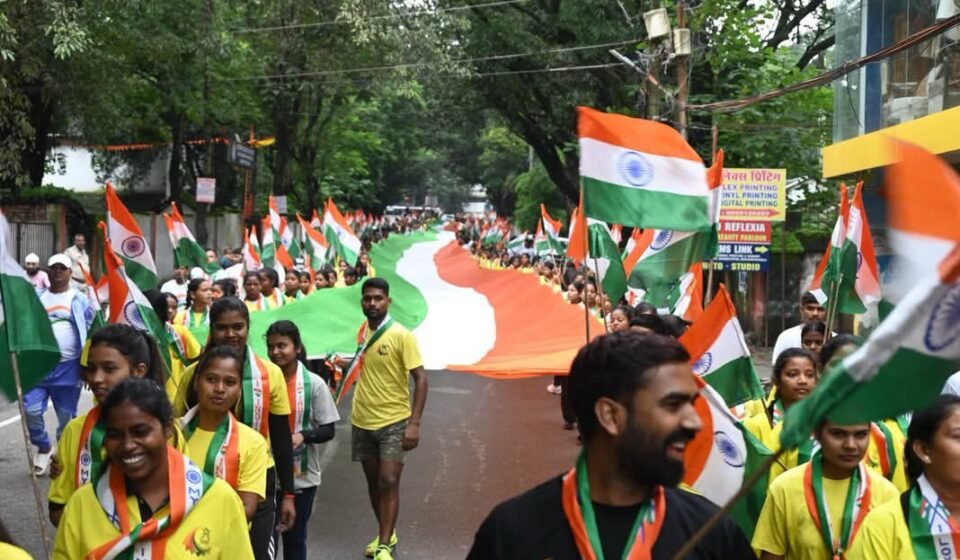
PATRIOTISM: A Daily Duty, Not a Seasonal Display
By Pampi Rani Das
Every year, as 15th August and 26th January approach, India witnesses a remarkable surge of patriotic sentiment. Tricolours flutter proudly on vehicles, homes, schools, offices, and marketplaces. Patriotic songs fill the air, social media overflows with messages celebrating the nation’s achievements, and people proudly display the national flag as a symbol of their love for the country. These celebrations undoubtedly strengthen the spirit of unity and national pride. Yet, amidst the festivities, an important question deserves reflection: Why does patriotism become so visible only around Independence Day and Republic Day?
Patriotism is far more than waving the national flag, attending ceremonial functions, or posting inspirational messages online. It is a lifelong commitment to the values, ideals, and responsibilities that strengthen a nation. Genuine patriotism is reflected in the everyday actions of ordinary citizens. It is seen when people obey traffic rules, pay taxes honestly, protect public property, conserve natural resources, keep their surroundings clean, respect the rights of others, and perform their duties with sincerity. A nation’s progress depends not only on the policies of its government but also on the integrity, discipline, and commitment of its people.
Unfortunately, for many, patriotism has become an occasional display rather than a permanent value. National flags are purchased enthusiastically before national festivals, but they are often found discarded on roadsides or in dustbins once the celebrations end. Social media profiles are adorned with patriotic images for a few days before returning to routine content. Such symbolic expressions have their place, but they lose much of their significance if they are not accompanied by genuine concern for the nation’s welfare throughout the year. True patriotism cannot be measured by the number of flags we wave but by the values we uphold every day.
At this point, the role of schools and educational institutions becomes especially significant. They are not merely centres of academic learning but the nurseries of responsible citizenship. Through morning assemblies, the singing of the National Anthem, observance of national festivals, NCC and NSS activities, Scouts and Guides, community service, debates, cultural programmes, and value-based education, schools nurture discipline, respect for the Constitution, and a spirit of national service. Teachers, through their words and personal example, inspire students to become honest, compassionate, and socially responsible citizens. Educational institutions should cultivate patriotism as a lived value rather than limiting it to ceremonial observances. When young minds learn that protecting the environment, respecting diversity, helping the underprivileged, and serving society are acts of patriotism, they grow into citizens who contribute meaningfully to nation-building.
The younger generation holds the key to India’s future. Schools and colleges must therefore encourage students not only to celebrate national festivals with enthusiasm but also to understand the ideals behind them. Patriotism means respecting the Constitution, appreciating India’s rich cultural diversity, safeguarding public resources, standing against injustice, and participating actively in community life. Volunteerism, environmental awareness, social responsibility, and ethical leadership should become integral parts of education. Such experiences transform patriotic emotion into meaningful action.
India’s freedom was not achieved overnight. Countless freedom fighters sacrificed their lives, comfort, and dreams so that future generations could live with dignity and liberty. The sacrifices of our soldiers continue even today as they guard the nation’s borders under the most challenging conditions. Their courage deserves far more than annual remembrance. Honouring them means preserving the democratic values they fought to protect—justice, liberty, equality, fraternity, and secularism. It also requires rejecting corruption, violence, discrimination, communal hatred, and intolerance, all of which weaken the very foundations of the nation.
In today’s digital age, patriotism also demands responsible use of technology. Citizens must exercise caution before forwarding messages, avoid spreading misinformation or rumours, and reject hate speech that divides society. Instead, digital platforms should be used to promote constructive dialogue, celebrate India’s achievements, encourage innovation, and inspire acts of public service. Responsible digital citizenship has become an essential aspect of responsible national citizenship.
True patriotism also involves respecting people from different religions, languages, cultures, and regions. India’s greatest strength lies in its diversity. The Constitution envisions a nation where unity flourishes despite differences. When citizens treat one another with dignity, empathy, and mutual respect, they strengthen the social fabric of the country. Patriotism should unite people around shared values and common aspirations rather than divide them on the basis of caste, religion, language, region, or political beliefs.
National festivals like Independence Day and Republic Day remain deeply significant. They remind us of our glorious past, honour the sacrifices of our freedom fighters and armed forces, and reaffirm our commitment to the Constitution. These occasions inspire pride, gratitude, and hope. However, if patriotism is confined to just two days a year, it risks becoming a ritual instead of a way of life. The true celebration of the nation lies not only in parades and ceremonies but also in our daily conduct, our integrity, and our willingness to contribute to the common good. Patriotism should be reflected in how we treat our fellow citizens, how honestly we perform our work, and how faithfully we fulfil our civic duties.
True patriotism is not a seasonal emotion that appears only with the arrival of national festivals; it is a continuous way of life that must guide our thoughts, words, and actions every day. When we move beyond symbolic celebrations and embrace responsibility, integrity, compassion, and unity in our daily lives, we truly honour the sacrifices of our freedom fighters, salute the courage of our armed forces, and respect the silent strength of their families. Let us pledge that our love for the nation will not fade after the flags are folded and the celebrations end. Instead, let it shine steadily in our conduct, shaping a stronger, more united, and more progressive India. Only then will Independence Day and Republic Day become not merely occasions of remembrance, but enduring reminders of our lifelong commitment to the nation.
(Pampi is MA in Mass Communication & Journalism, Gauhati University. She is Founder & Director, HomeLife Services Pvt Ltd)