Dumka scientist helps develop AI system to prevent elephant-train collisions
PNS
Dumka
A scientist from Jharkhand’s Dumka has played a key role in developing an artificial intelligence (AI)-based technology designed to prevent elephant-train collisions, a persistent challenge in several forested regions of India. The innovation, titled “Real-Time AI Vision System for Elephant Risk Detection on Railway Tracks,” has been officially registered under the Copyright Act, 1957, marking a significant achievement in the field of wildlife conservation and railway safety.
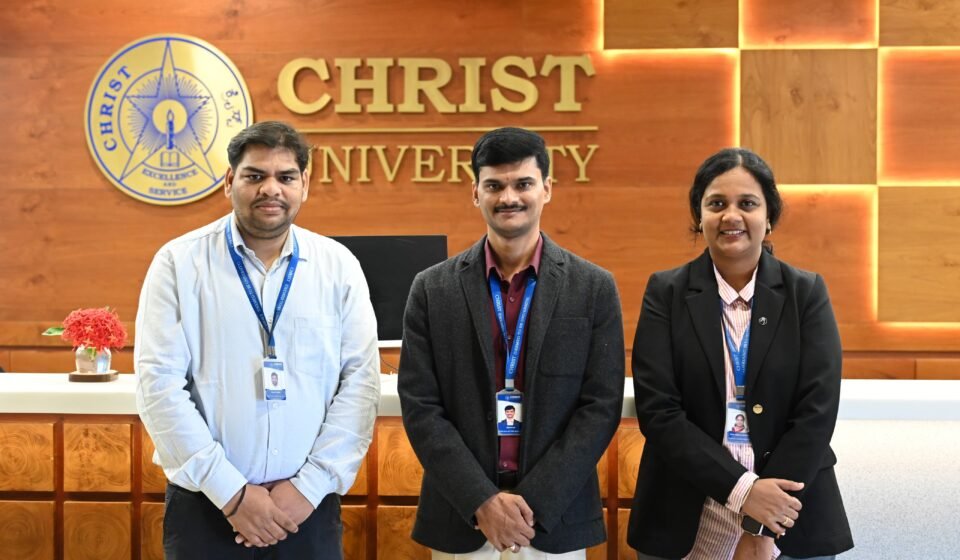
Dr. Suraj Kumar, a native of Dumka, was part of the research team led by experts from Christ University, Bengaluru, along with scientists from partner institutions. The team also included Dr. Srinivas, Dr. Dara Vijay Lakshmi, Nisha Francis, Dr. K. Francis Sudhakar, Lakavath Anil Kumar, Mukesh Pradhan, and Sharath Chandra Reddy.
For Jharkhand, where elephant movement frequently intersects with railway lines, the innovation carries special significance. The state has witnessed several fatal train accidents involving elephants in recent years. In February this year, an elephant calf was killed after being hit by a freight train in Latehar district, while two adult elephants died in a separate incident in West Singhbhum. Such recurring tragedies have underscored the need for an effective early-warning system.
The AI-powered framework integrates Convolutional Neural Network (CNN)-based computer vision, thermal infrared imaging, LiDAR sensors, and Edge AI processors to continuously monitor railway tracks, even in darkness or adverse weather conditions. When elephants are detected near the tracks, the system instantly alerts train pilots, station masters, and forest officials while also communicating with railway signalling systems to initiate precautionary measures.
The technology further enables automated safety interventions, including dimming locomotive headlights and activating trackside acoustic signals that gently steer elephant herds away from the railway line without causing panic. Dr. Kumar’s contribution to the project has brought recognition to Dumka and highlighted Jharkhand’s growing role in developing technology-driven solutions for wildlife conservation and public safety.